Amorphous or semi-crystalline PEEK film: begin with the process
Amorphous and semi-crystalline PEEK films are different starting points for an engineering process. Choosing between them requires more than comparing colour or a headline temperature rating. A useful decision considers the supplied film, the thermal history of converting, and the properties required in the finished component. The specification should identify the required condition at each stage rather than assuming that the delivered state will remain unchanged during manufacture.
For a buyer, the first question is therefore practical: will the film be used essentially as supplied, or will it be heated, formed, bonded or otherwise transformed? Answering that question helps the supplier propose a meaningful sample and prevents comparisons between films that were evaluated under different conditions.
What the two descriptions mean
PEEK is a thermoplastic polymer. In an amorphous film, polymer chains lack the ordered crystalline regions present in a semi-crystalline material. Semi-crystalline does not mean that the whole film is crystalline; ordered and disordered regions coexist. The supplied structure depends on manufacturing and thermal history. These terms describe material structure, not a universal ranking in which one state is always superior.
Victrex's PEEK film thermoforming guide explains that thin PEEK films can be produced in an amorphous condition and that heating can promote crystallisation. Its processing guidance concerns the manufacturer's own APTIV films. It provides useful background, but its settings and grade properties should not be presented as Furui specifications.
Define the finished part before selecting the incoming film
Write down the function of the finished component. Is the film a flat insulating layer, a formed diaphragm, a laminated layer, or a component that must retain its dimensions after heating? Identify what failure would look like: unacceptable distortion, tearing during forming, separation from an adjacent layer, or loss of the required electrical or mechanical function. This gives the development team a decision criterion instead of a broad request for the strongest film.
Next, distinguish design requirements from manufacturing preferences. A transparent appearance might help visual inspection, while the final assembly may not require transparency. A film that is convenient to handle may still need a different condition after forming. Mark each requirement as essential, desirable or merely convenient so that a sample can be assessed against its actual purpose.
Map every thermal step
Prepare a process map that includes heating before forming, tool contact, bonding, drying, cooling, and any later exposure in assembly. Record the intended duration and how temperature will be measured. A machine setpoint does not automatically describe the temperature experienced by a thin film. The location of the sensor and the path between heater and tool should be part of the trial record.
Do not prescribe a forming recipe simply because a general PEEK guide lists a familiar temperature. Tool geometry, film thickness, equipment and handling can change the result. Agree an initial trial plan with the film supplier and process owner, then record the actual settings used for each sample. If a trial changes several settings together, label the result as a combined process change rather than evidence that one variable solved the problem.
Treat appearance as an observation, not a certificate
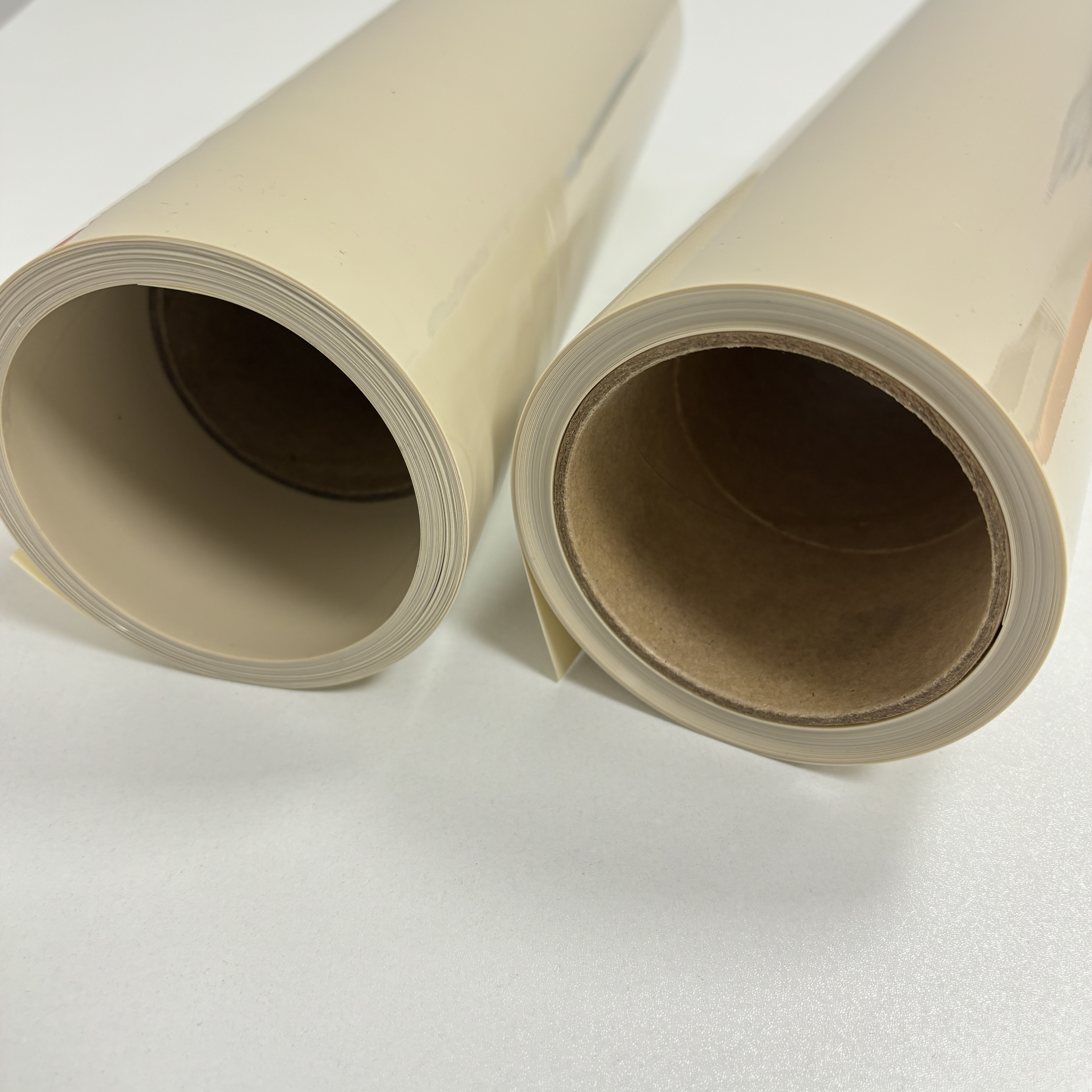
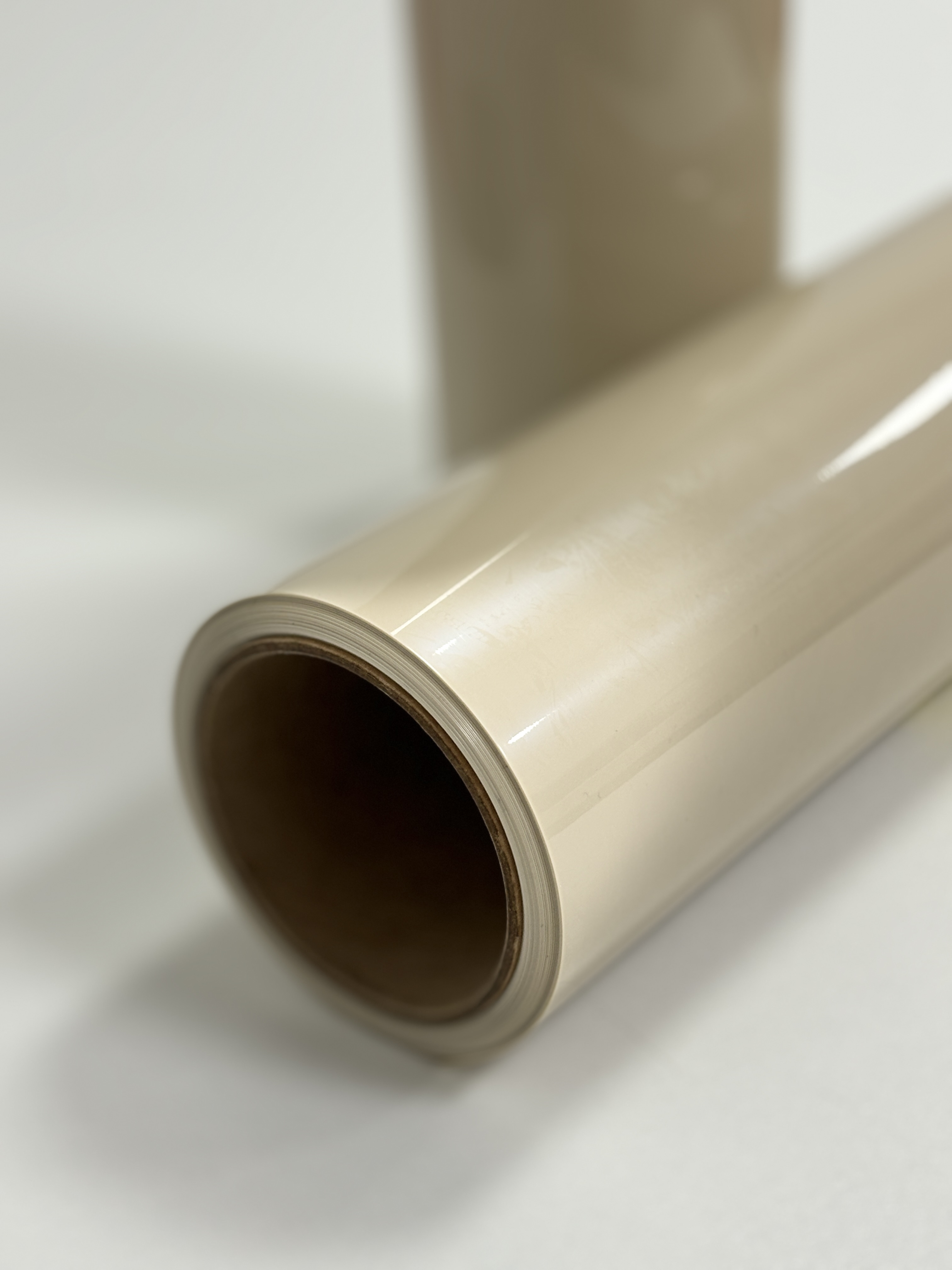
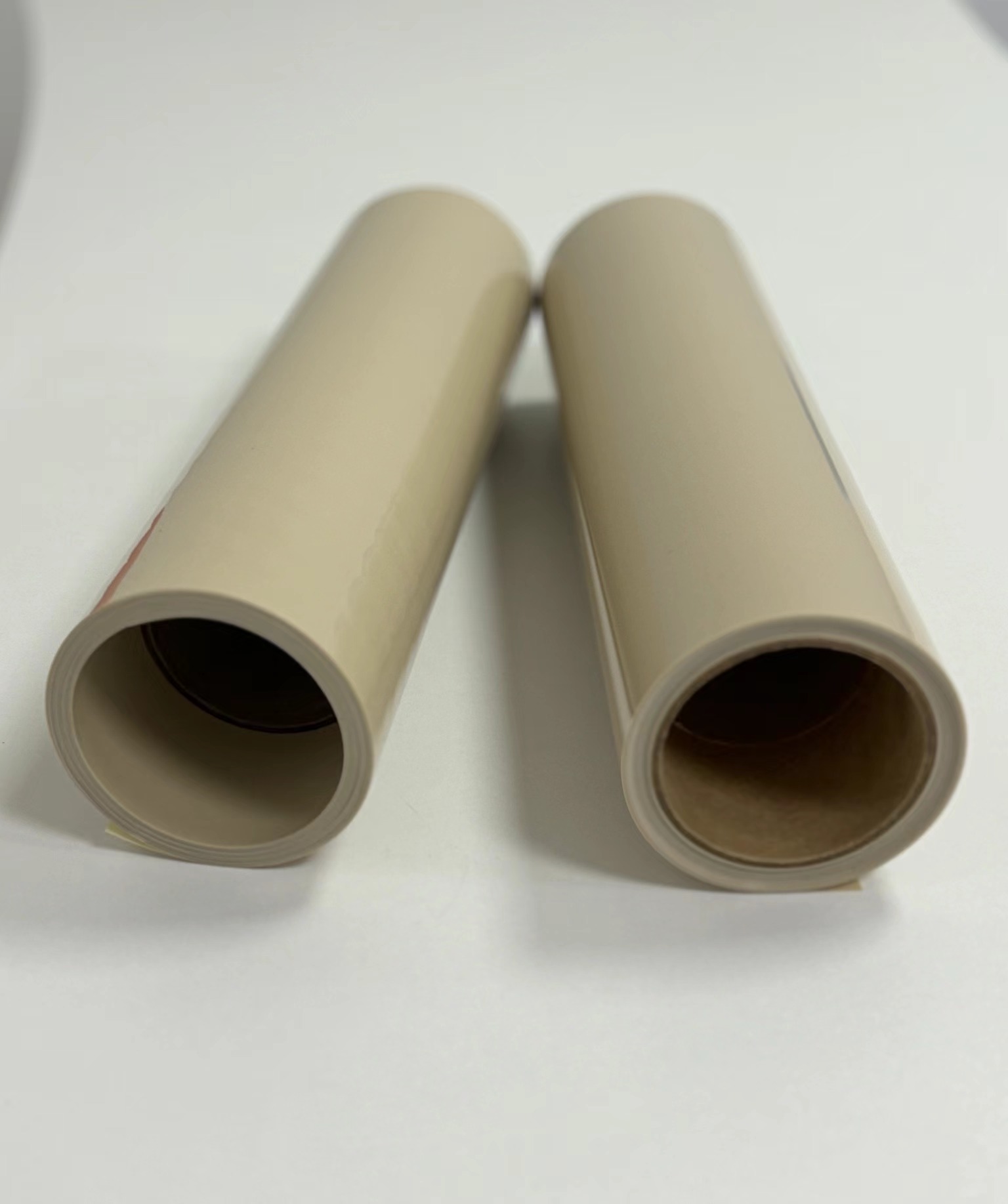
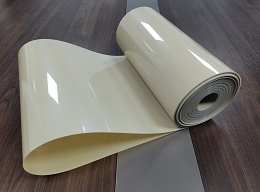
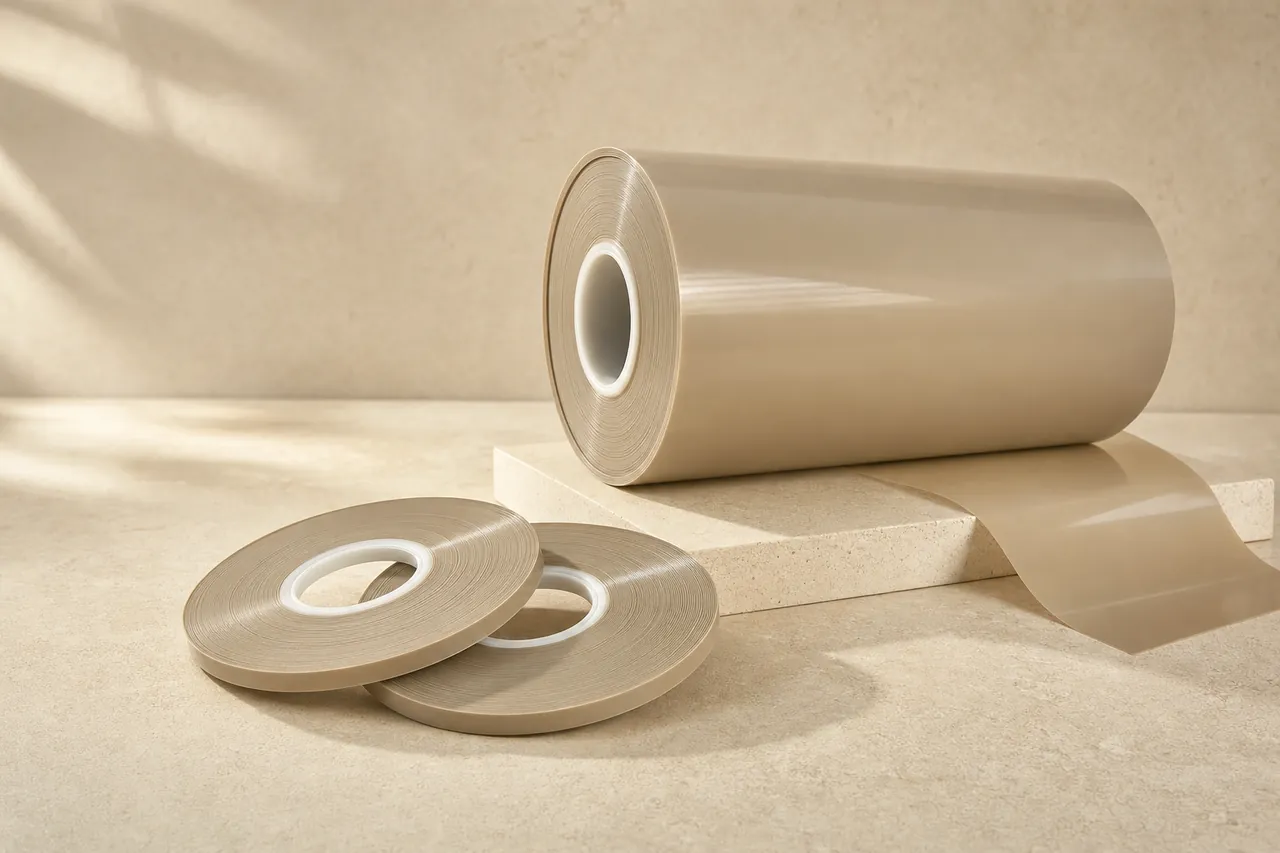
Colour, haze and surface gloss can be useful observations when comparing samples. They are not a substitute for identifying the grade or confirming its manufacturing history. Lighting, film thickness, surface texture and the background behind a transparent sample can all influence a photograph. Ask for the supplied condition in writing rather than classifying a roll from a website image.
Where crystallinity is an important requirement, ask what measurement or supporting information is available and what sample it represents. Record whether the result concerns the incoming film, a heat-treated coupon, or a finished formed part. A result for one of those objects should not silently become a claim about the others. If no suitable measurement is available, keep that requirement open in the development record.
Keep thickness and structure separate in comparisons
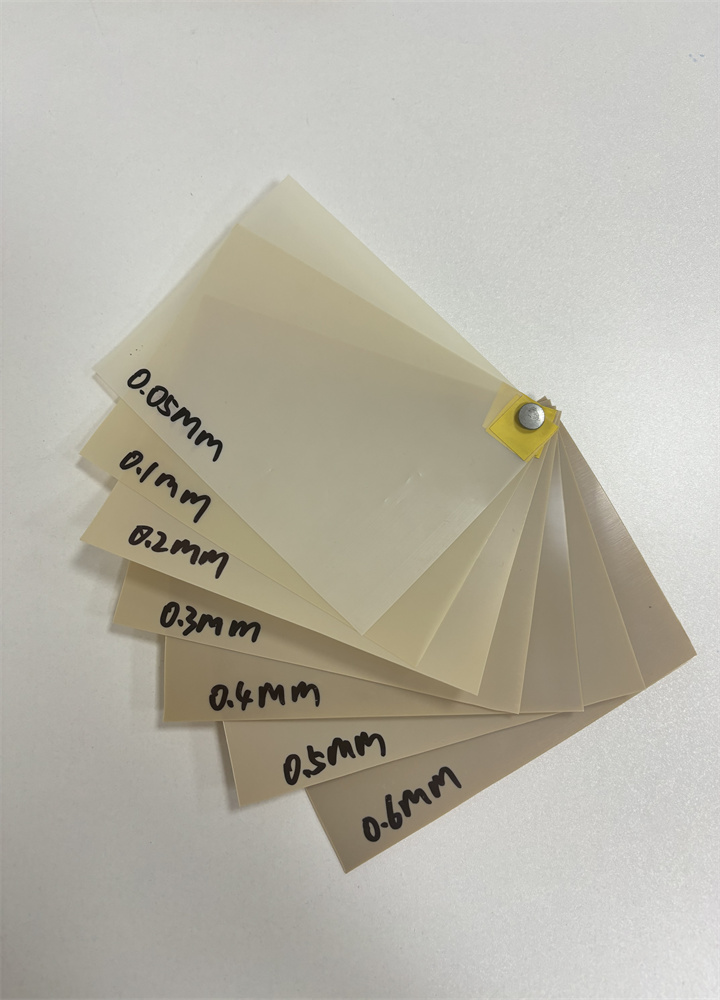
It is easy to attribute a different forming response to crystallinity when the samples also differ in thickness or surface finish. Start with a comparison table containing film identity, supplied condition, nominal thickness, width, surface description and batch reference. Document every known difference. If equal-thickness samples cannot be obtained, acknowledge that limitation when interpreting the trial.
Measurement should also follow an agreed method. Ask where thickness is measured across the width and which values are reported. A nominal thickness is not a complete description of variation. For a sensitive component, decide whether local variation near a forming feature matters more than a broad average. Avoid drawing a material conclusion from one convenient measurement at the edge of a sheet.
Build a small, interpretable forming trial
A productive trial starts with a specific question. For example: can this incoming film form the required feature without unacceptable thinning, tearing or dimensional change after cooling? Keep the specimen geometry and inspection method consistent. Use sample identifiers that allow a formed piece to be traced back to the incoming film and the corresponding machine record.
Inspect more than the most attractive part. Record edge condition, local thinning, visible defects, feature definition and the dimensions relevant to assembly. Include unsuccessful samples in the record. A single successful forming cycle can demonstrate feasibility, but it does not establish a stable production window. If the first trial is promising, repeat it with enough specimens and process variation to support the next development decision.
Check bonding and converting in the intended sequence
Film may behave differently as a standalone sheet and as part of a laminate. Define which side contacts an adhesive, coating, tool or mating layer. Describe any treatment already present, how the film is cleaned, and how long it is stored before the next operation. Keep the sample protected from handling contamination without introducing a cleaning method that has not been agreed with the supplier.
The Victrex technical datasheet library lists distinct amorphous and semi-crystalline film families. This supports an important procurement habit: obtain information for the particular film under consideration. Do not use a general resin datasheet, an unrelated filled grade, or a competitor's conversion example as the acceptance document for an incoming Furui film order.
Specify the acceptance condition
Define whether acceptance takes place on the delivered roll, after a simulated thermal exposure, or on the finished component. Include the conditioning and measurement timing. Otherwise, a supplier may correctly deliver one condition while the buyer assesses another. A clear specification connects each requirement to the object being measured and the stage at which it must be satisfied.
Separate development targets from agreed supply tolerances. A target used to explore feasibility is not automatically a contractual promise. Before moving to a production order, ask both teams to review the final specification, the inspection information to be supplied and the way a change in film grade or processing will be handled. This reduces ambiguity without requiring unnecessary paperwork for a simple evaluation sample.
Questions to include in the enquiry
Keep a dated revision of the enquiry and record any agreed changes after the sample discussion. If a drawing or acceptance method changes during development, identify which samples were made against each revision so that earlier observations are not accidentally applied to the revised requirement.
- What is the end use and which failure mode is most important?
- Is the film required as a roll, slit roll or sheet?
- Which supplied structural condition is requested, and why?
- What thickness, width, quantity and surface are needed?
- Will the film be heated, formed, laminated or coated?
- What measurements or production information need review?
- Which results must be confirmed on the finished component?
Attach a drawing when geometry is important. If the application is still being developed, label uncertain values as provisional. It is usually more useful to describe the uncertainty than to provide a precise number that the engineering team has not yet approved.
Frequently asked questions
Is semi-crystalline PEEK film always the better option?
No. The appropriate starting film depends on the intended process and final component. A purchasing decision should consider forming, subsequent heating, dimensional requirements and the evidence available for the selected film. Compare samples against the application rather than treating a structural label as a complete performance specification.
Can I identify the film structure from a product photograph?
A photograph can show appearance but cannot establish a grade, a measured crystallinity value or a guaranteed processing response. Ask the supplier to identify the supplied condition and available supporting information. Keep photographic observations separate from test results and formal incoming acceptance criteria.
Should I use the same process settings for every PEEK film?
No universal recipe is established by the name PEEK alone. Discuss the exact film, dimensions, tooling and equipment with the relevant suppliers. Begin with an agreed development trial, document the actual conditions, and verify the resulting component before accepting a process for repeated manufacture.
Discuss the film and the development question together
Furui manufactures PEEK film and can discuss film formats, custom slitting and available production and inspection information. Send the intended process together with the dimensions and sample requirement. Use the project enquiry page to request an assessment; the feasible supply condition and relevant supporting documents should be confirmed for the particular requirement.